Before the 2014 FIFA World Cup, Neymar Jr., just 22 at the time, was one of the most exciting players to watch. Even though Brazil didn’t reach the final, his performance captured global attention.
A few years later, in 2017, Cristiano Ronaldo won his fifth Ballon d’Or, one of football’s highest honors.
Their journeys may seem different, but they share something important. Both grew up in poverty, where even basic needs were hard to meet. Football came into their lives almost by chance, but it changed everything. It didn’t just shape their careers. It changed the future of their families.
Why Football Matters
Neymar and Ronaldo are only a small part of a much bigger story. Across the world, football has helped people rebuild their lives.
In refugee camps supported by the United Nations, football is one of the most widely played sports. It offers more than just a way to pass time.
It helps people:
- Stay active
- Build friendships
- Feel a sense of belonging
- Develop confidence
- Discover new opportunities
Stories from Goal Click Refugees show this clearly. From Jordan and Kenya to Europe, the US, and Australia, football has helped people adjust, find work, and start again.
At its core, football brings people together and breaks down barriers between communities.
What Research Shows
The impact of football is not just based on stories. Research supports it too.
Studies have found that:
- Coaches focus on personal growth, not just performance
- Strong mentorship improves academic outcomes
- Sports help build confidence, discipline, and resilience
For many young people, football becomes a space to learn skills they don’t always get in the classroom.
Football as a Tool for Change
Because of this, several global initiatives are using football to drive change.
Some key examples include:
- Football for Schools by FIFA and UNESCO, reaching millions of children
- Streetfootballworld, which supports young people through sport
- Football for the Goals by the United Nations, linking football to global development goals
These efforts highlight how football can support education, health, and social development.
The Indian Context
In India, football has traditionally been more popular in cities, while sports like cricket and kabaddi dominate in rural areas.
But this is beginning to change. Governments, non-profits, and local leaders are now using football to create opportunities in underserved communities.
Real Change on the Ground
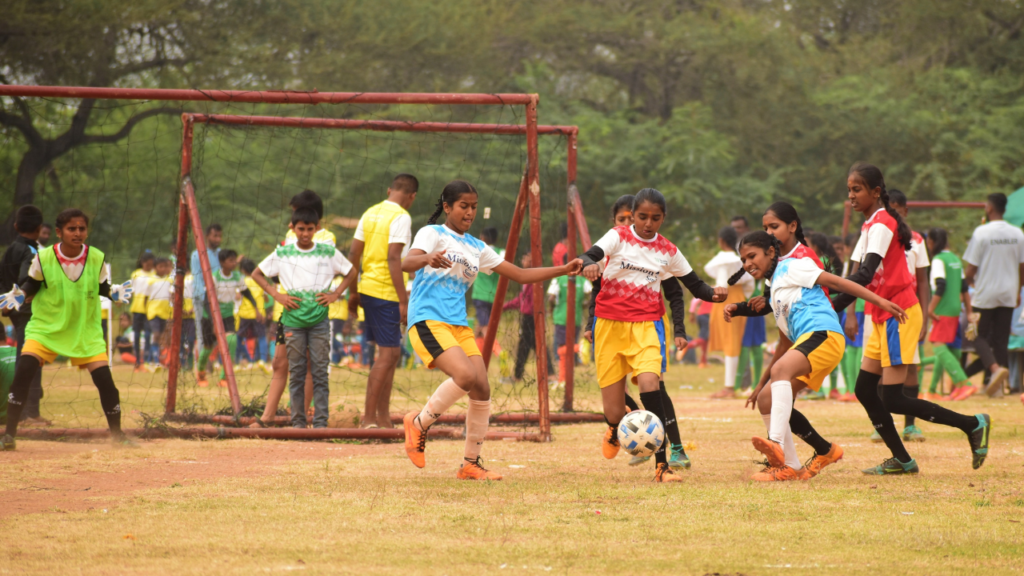
Take the example of teenage girls in Chachiyawas, Rajasthan.
They come from communities where:
- Child marriage is still common
- Education is not always accessible
Through football programs, these girls are now:
- Playing in local and regional matches
- Winning prize money
- Gaining support from their families to continue education
This shift is not just about sport. It is changing mindsets within families and communities.
Similar stories are emerging across India, from Jharkhand to Andhra Pradesh.
Our Role Through the PLAY Program
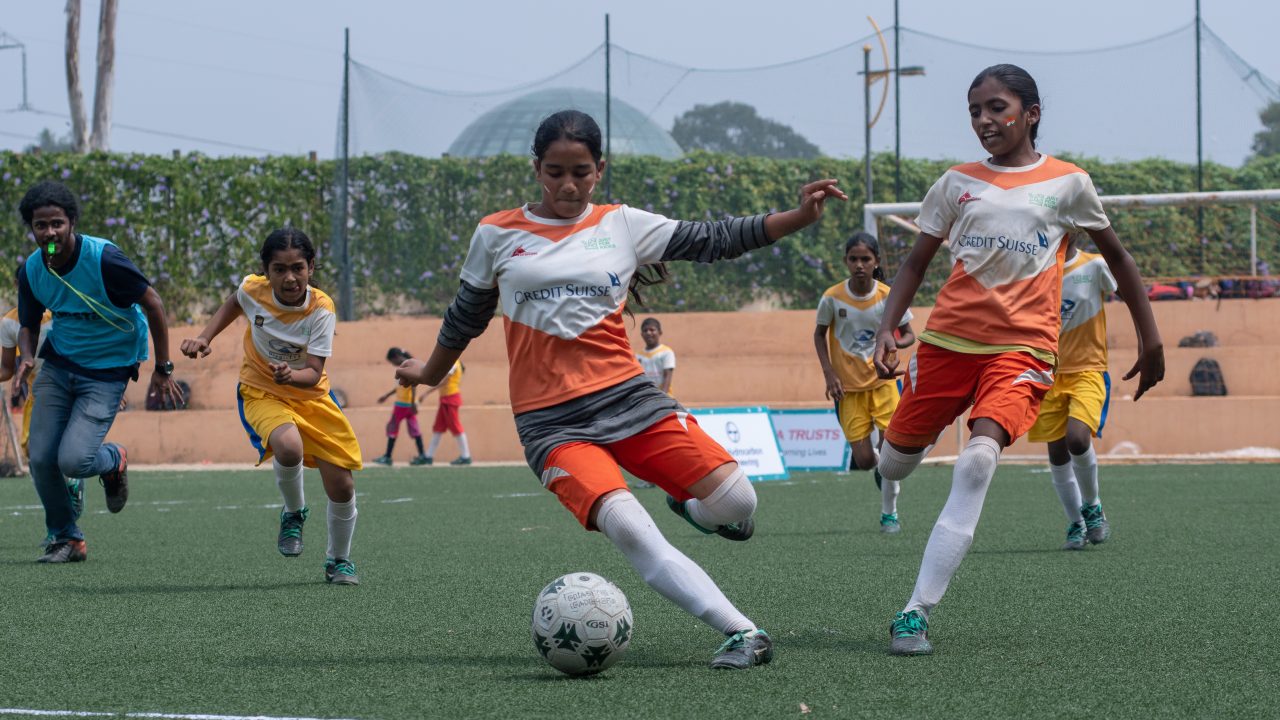
At Enabling Leadership, the PLAY program builds on this potential.
It focuses on children from low-income communities and supports both their education and personal growth.
The program helps children:
- Build confidence
- Learn teamwork and leadership
- Develop life skills for the future
What started small has grown significantly. Today, PLAY reaches more than 5,800 children across India and Southeast Asia.
Beyond the Game
For many children, this is their first exposure to football. But the impact goes much deeper.
The program:
- Encourages girls and boys to play together
- Challenges social stereotypes
- Builds stronger, more supportive communities
Over time, even parents begin to see its value and actively support it.
A Force for Change
Football is much more than a game. It is a powerful tool for transformation.
From global icons to young people in underserved communities, its impact is clear. It builds hope, resilience, and opportunity.
When young people are given the right platform, they don’t just play. They grow, they lead, and they begin to shape their own futures.
That is the true power of football.
References :
https://www.unhcr.org/goalclick/goal-click-refugees/
https://footballforschools.fifa.com/en/info/introduction-to-football-for-schools.php https://www.tandfonline.com/doi/abs/10.1080/10413200601113786
https://scholar.google.com/scholar?q=related:_dEcyYTh4c0J:scholar.google.com/&s cioq=sports+and+life+skills&hl=en&as_sdt=0,5#d=gs_qabs&t=1690749644175&u= %23p%3DOUQm7zOXopMJ
https://scholar.google.com/scholar?q=related:-9h2nZ9jqfMJ:scholar.google.com/&sci oq=sports+and+life+skills&hl=en&as_sdt=0,5#d=gs_qabs&t=1690750091935&u=%2 3p%3DILkhOteINUkJ
https://www.forbesindia.com/article/lifes/football-a-social-and-gender-tool-empowerin g-girls-in-rural-india/80451/1