Music lessons are often introduced as a way to explore creativity. Students learn rhythm, melody, and technique while engaging with something expressive and enjoyable.
However, when music lessons are designed with intention, their impact extends far beyond creative skill. They become a powerful tool for building confidence, collaboration, and essential life skills. These are capabilities that influence how students interact not just within a classroom, but in broader social and real-world settings.
At Enabling Leadership, music lessons are used as a medium for leadership and life skills development through structured programs like EL Create. The focus is not only on learning music, but on shaping how students interact with others and engage with the world around them. Over time, students begin to see music not just as an activity, but as a shared experience that requires awareness, responsibility, and participation.
Why Music Lessons Matter During Adolescence
This is particularly important for students between the ages of 11 and 15. During this stage, young people are developing confidence, navigating social dynamics, and forming a sense of identity.
Music lessons provide a space where these processes can unfold naturally, without the pressure of traditional academic expectations.
Unlike traditional classroom settings, music creates an environment where participation is active and collaborative. Students are not just learning individually—they are contributing to a shared experience.
This makes music lessons especially effective for students who may not always engage in conventional academic formats, giving them an alternative space to express themselves and build confidence.
Building Collaboration Through Music Lessons
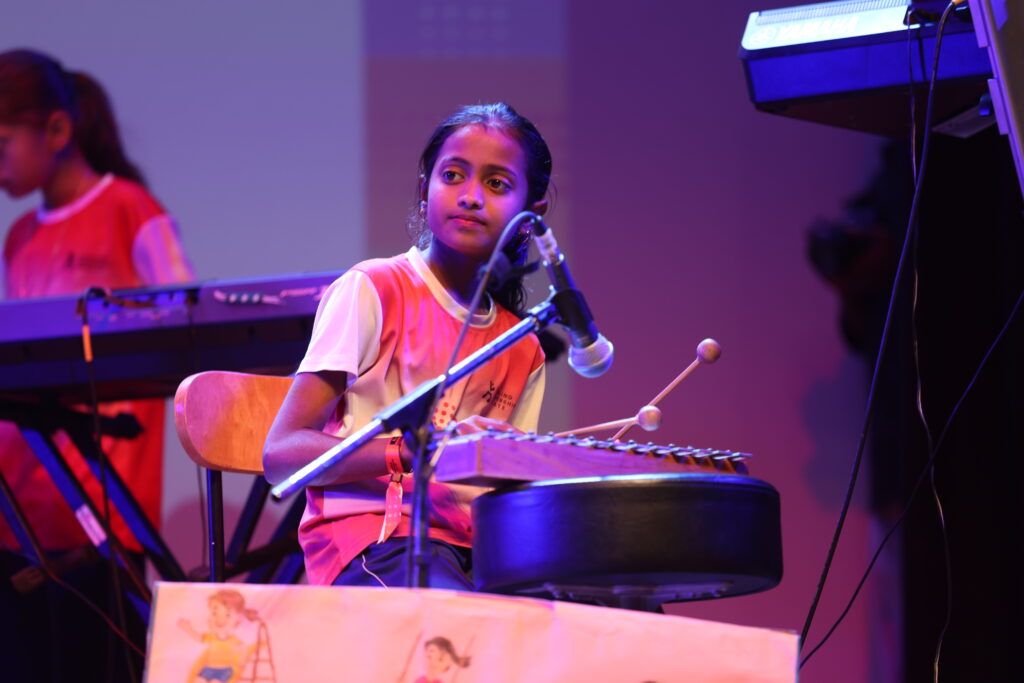
In a group setting, music lessons require students to listen carefully and align with others. Timing, coordination, and attention become essential. If one element is out of sync, the entire group is affected.
This builds an immediate and practical understanding of shared responsibility.
Students begin to see that their role is connected to the performance of the group. They learn to adjust, respond, and collaborate in real time, often without explicit instruction.
Over time, this creates a deeper appreciation for teamwork. Progress is no longer seen as an individual effort, but as something that is built collectively through coordination and consistency.
Confidence Building Through Participation
Music lessons also create opportunities for individual growth.
Students who may not actively participate in traditional classroom settings often find confidence through music. The structure of these sessions allows them to take ownership of their role without the pressure of formal evaluation.
As they become more comfortable, they begin to engage more actively within the group. Small contributions—keeping rhythm, following cues, or supporting others—help build a sense of capability.
This confidence is not limited to music. It influences how students communicate, how they interact with peers, and how they approach unfamiliar situations.
By experiencing success in a collaborative environment, students begin to see themselves as capable contributors.
The Role of Reflection in Learning
In EL Create, facilitators support this process through guided reflection.
Students are encouraged to think about their experience:
What worked well in the group?
Where could coordination improve?
How did they respond to feedback?
This reflection helps students connect their actions to outcomes. It builds awareness of how their behaviour affects others and how they can improve over time.
Through this process, students begin to understand not just what they are doing, but how they are doing it, strengthening both skill and awareness.
Moving Beyond Creativity to Capability
Music lessons, in this context, are not about producing performers.
They are about shaping individuals who are more confident, more aware, and better able to collaborate.
Students begin to understand that success is not just about individual skill, but about how effectively they work with others. They learn to listen, adapt, and contribute in meaningful ways, even in unfamiliar situations.
At Enabling Leadership, this approach ensures that music lessons contribute to long-term development outcomes.
Because when designed intentionally, music is not just a creative outlet—it becomes a powerful medium for building life skills that extend far beyond the classroom.